
2017 Harvest
Seems like the only time I have to post, is after harvest… We had the privilege to work with a new brewery this year, West Shore Brewing in Clarence Center, and kept learning… there’s a lot to learn.
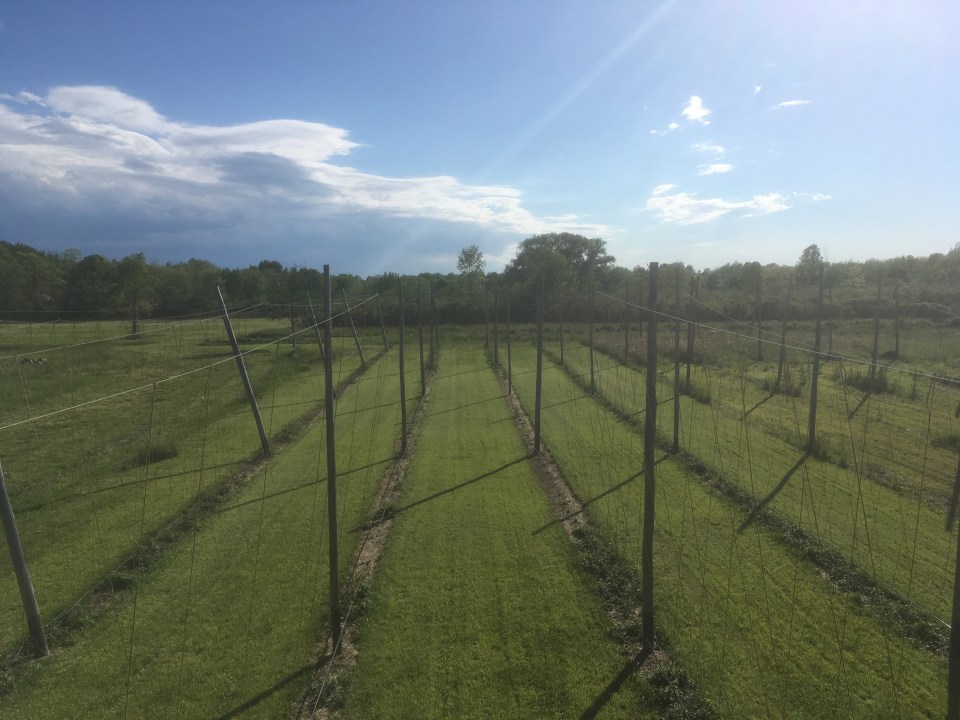
Beats a day at the office, any day.
We seemed to have the opposite issue that a lot of local farmers we spoke with had last year — we have perhaps too much water.
Last year, 2016, was a bit of a drought and other farms we knew had to haul tanker trucks of water in 1-2 times a week to keep their plants alive. At 18 feet tall and with a lot of mass and activity, hops are a thirsty plant. With hillside runoff in the Lake Erie watershed, we are fortunate to have several natural springs on site which we pull fresh water from.
Unfortunately, the ground appeared to have settled after a couple years, and we had standing water in the large field. This appears to have contributed to frost heave, and a good chunk of the plants in the large field were uprooted and exposed to the elements over the winter.
Despite the plant losses, we were still able to keep up with growing quality hops, and keep up with local orders. Water wasn’t an issue this year for our neighbor farms, thankfully.
Before the winter came, we were able to experiment with field drainage, and built the rows back up to prevent losing any more plants this year.

I think we figured you can fit about half a cubic yard in a Gator. We moved a lot of dirt in the back of this Gator to build the rows back up by hand, before investing in nicer wheels.
Unfortunately, a few fellow hop farmers decided to pull their plants out or otherwise leave hops alone for now.
The infrastructure to process a hop harvest isn’t as strong as it could be in Western New York. Once the hops are harvested, they must be dried and cooled immediately, and pelletized shortly thereafter. We know of at least one story of a local harvester who deceived hop farmers and quit and sold his machine the day before he agreed to harvest, leaving them with thousands of pounds of hops to rot on the bines.
Further, it has been difficult for many to move large volumes at competitive prices. While we’ve enjoyed success with local breweries, there isn’t yet a huge consumer demand for fresh, local ingredients in their fresh, local beer.
To be fair and honest, New York hops aren’t yet up to scale, so what’s available is in limited quantity, and sometimes of questionable quality. I have heard stories of hop farmers delivering hops in packaging that is inappropriate, or otherwise questions the quality-focus of the entire operation — which doesn’t look good for anyone.
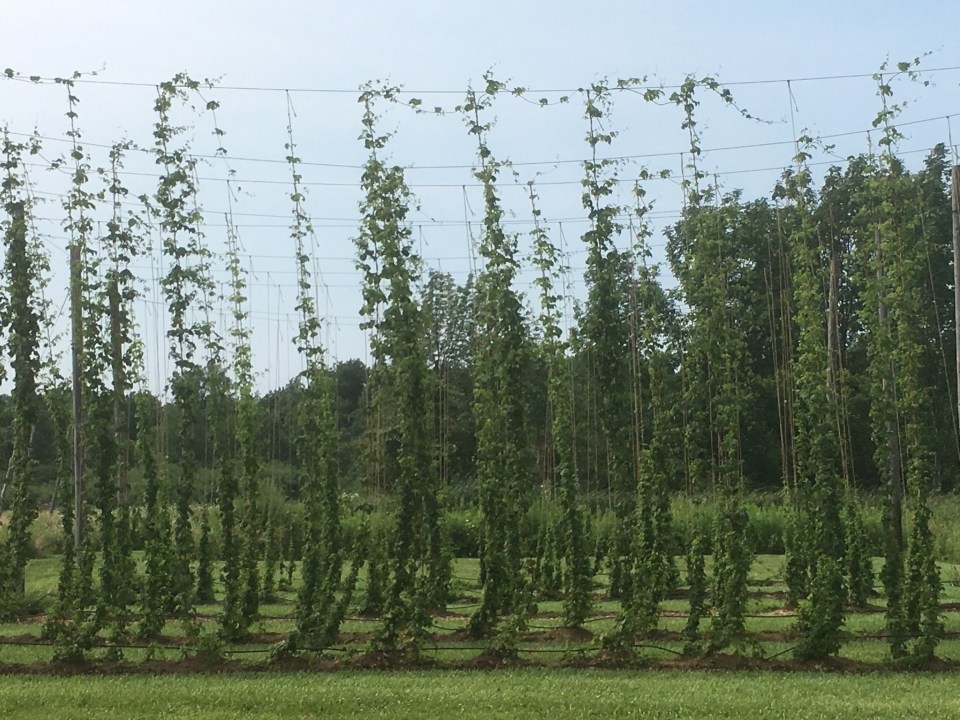
Thanks as always to our customers that let us live the dream from time to time, and the brewers focused on using local ingredients and working with local farms to bring those ingredients to market. Your support of our industry has parallels with your customers supporting local beer, and we need each other to succeed.
Cheers,
V
 Lupulin Fields